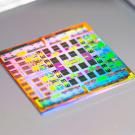
With the next step in computer evolution on our doorstep, researchers are grappling with how the technology of today can facilitate designing the computers of tomorrow. Enter gem5, a computer simulation tool that could become a gateway to future generations of supercomputers.
As large language models like ChatGPT become more integrated into the human experience, Assistant Professor of Computer Science Muhao Chen wants to ensure that these tools are reliable, credible and protected.
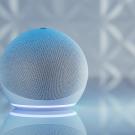
This may come as no surprise to internet users that Amazon collects data from your interactions with Alexa and shares it with advertising partners to curate online ads. But Alexander Gamero-Garrido, a new assistant professor in the Department of Computer Science, proved this was the case.
Dongyu Liu's website features the standard materials of an academic researcher: a CV, published research, a list of talks. But what catches the eye on Liu's site is a page of photos: Liu and his labmates at a lake retreat and on a ski trip; Liu's supervisor handing him a slice of cake at his graduation; a lab-wide breakfast after an all-nighter to hit a deadline.
Air travel now accounts for about 3% of worldwide greenhouse gas emissions, and the sector’s emissions are rising: Global air travel more than doubled from 2004 to 2019. This is literally a first-world problem — most people on Earth fly rarely, if ever. By some estimates, the 1% of humans who fly most often are responsible for half of all air travel emissions.
Center for Information Technology Research in the Interest of Society and the Banatao Institute (CITRIS) at the University of California (UC) recently announced the 2022 CITRIS Seed Awards recipients. The eight selected proposals, submitted by multicampus teams from Berkeley, Davis, Merced and Santa Cruz, will receive up to $60,000 for their work, thanks in part to external philanthropic support.
There’s been a lot of media discussion about blockchain over the last several years, particularly in the context of the ever-fluctuating cryptocurrency market. But what is blockchain technology really?
A new study from UC Davis suggests that artificial intelligence recommendation algorithms on sites like YouTube and TikTok can play a role in political radicalization. The research team trained “sock puppets” — artificial entities that act like users. Each sock puppet was given a series of right- or left-leaning videos to watch every day, and then the team would compare the recommendations on the sock puppet’s homepage to see if its recommended videos gradually became more biased.
Ph.D. student Rajvardhan Oak stumbled upon an underground market for fake Amazon reviews by accident while scrolling through Facebook. Seedy scam networks are using social media to organize campaigns that influence product ratings. They’re a headache for shoppers—and tough to crack down on.
A new study from UC Davis suggests that AI recommendation algorithms on sites like YouTube and Tik Tok can play a role in political radicalization. If the algorithm sees that a user is watching a lot of biased political videos, the researchers found that it can trap them in a “loop effect,” recommending similarly biased and potentially more extreme content on their homepage and sidebar.
In 2012, UC Davis Computer Science Distinguished Professor Prem Devanbu and his collaborators Zhendong Su, Abram Hindle, Earl Barr and Mark Gabel changed the field of software engineering with their paper, “On the Naturalness of Software.” Ten years later, the paper’s legacy has been recognized with a Most Influential Paper Award from the 2022 International Conference on Software Engineering (ICSE).
Computer Science Assistant Professor Jiawei Zhang is developing a neural network that can potentially find, flag and stop inaccurate or misleading articles posing as fact before they spread.
Over the next four years, UC Davis students will be designing the car of the future as part of the U.S. Department of Energy (DOE)’s EcoCAR Electric Vehicle (EV) Challenge. The competition challenges students to convert a Cadillac LYRIQ EV into an autonomous, next-generation battery-electric vehicle with vehicle-to-everything connectivity so it can interact with devices and the environment.
Doctors already rely on a patient’s medical history to prescribe the right treatments and medications, but Computer Science Distinguished Professor Kwan-Liu Ma and Dr. Shin-Ping Tu at the UC Davis School of Medicine think they can also use it to improve how the entire medical system works together.
The face already plays an important role in communication, but a group of UC Davis computer scientists led by Ph.D. student Shuyi Sun is taking this to the next level. The team is designing facial jewelry that can use signals from a person’s facial muscles to send wireless commands to at-home devices like Alexa and Google Home. By reading a user’s conscious and unconscious gestures, the technology has the potential to help silently operate lights or other devices or discreetly send messages to get out of potentially dangerous situations.