In a perspective published in Science, Professor Raissa D’Souza explores a breakthrough in understanding how disorder can promote stability in complex systems and what it could mean for science and society.
Led by the UC Davis Department of Computer Science, the AI for Health Initiative will connect researchers and clinicians across disciplines to advance responsible AI use in medicine, support student training and strengthen partnerships with UC Davis Health.
UC Davis engineers Isaac Kim and Mingwei Zhang were among the recipients of the inaugural awards granted through the U.S. Department of Energy’s Genesis Mission — a national program leveraging artificial intelligence to accelerate breakthroughs in energy, discovery science and national security.
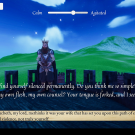
What if you could talk Shakespeare’s Macbeth out of violence? A new UC Davis-developed game lets players do just that, using AI to simulate dialogue and teach real-world conflict de-escalation skills through interactive storytelling rooted in some of the greatest dramas in the English language.
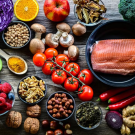
A computational program trained on U.S. meal records identified simple food substitutions that improve nutritional quality and lower costs, according to a new study led by UC Davis computer scientists.
Climate models generate billions of data points, and traditional analysis methods can't keep up. UC Davis Ph.D. student Yuya Kawakami developed ClimateSOM, an interactive visualization tool that helps scientists explore thousands of climate futures and uncover patterns that current methods can miss.
Associate Professor of Electrical and Computer Engineering Marina Radulaski and Associate Professor of Computer Science Mohammad Sadoghi are among this year’s class of Chancellor’s Fellows at the University of California, Davis. The distinction is given to early academics doing exemplary work in their fields.
What if a smartphone could see what the human eye misses? A new UC Davis-designed app uses machine learning to track subtle hand movements during stroke rehabilitation, giving clinicians more specific data to assess recovery and tailor patient care.
What if your next STEM teacher were an AI agent in virtual reality? UC Davis computer scientist Michael Neff combines movement science, gesture modeling and deep learning to create lifelike digital instructors — paving the way for more human embodied learning experiences.
The Bezos Earth Fund has announced a $2 million grant to the University California, Davis, the American Heart Association and other partners to advance “Swap it Smart” as part of its AI for Climate & Nature Grand Challenge. The funding will support research that could help redesign foods, for example optimizing for flavor profile, nutritional properties and lower costs and environmental impact.